
 support@registrationkraft.com
support@registrationkraft.com
support@registrationkraft.com


By launching the Pradhan Mantri Kaushal Vikas Yojana (PMKVY), the central government brought in exciting opportunities for the unemployed citizens. PMKVY is a government scheme which provides employment to the unemployed youth. The new version of this scheme, known as PMKVY 4.0, offers free training and certificates along with it. The beneficiaries under this scheme […]

By the time most people are senior citizens, they are no longer working because they’ve retired from their jobs. Many elderly prefer to invest in schemes specifically designed for them since they help to reduce financial burden. If you are a senior citizen who is looking for the best investment schemes available for the senior […]

NITI Aayog, a policy think tank of the Government of India, was established on January 1, 2015.“NITI” is a Sanskrit term which refers to ethics, moral conduct, principles, or guidelines for proper behavior or governance. It is confined to the principles of morality, righteousness, and practical wisdom. The name perfectly blends with what the Government […]

National Pension System (NPS) is an easily accessible, tax-efficient and flexible pension system open to all the citizens of India. Under this pension system, the individual contributes to their retirement account. The employer can also co-contribute for the social security of their employee. NPS works on a Defined Contribution basis in which the subscriber contributes […]
On February 13, 2024, Mr. Narendra Modi, Honorable Prime Minister of India launched the prestigious PM Surya Ghar Muft Bijli Yojana for Indian households. This scheme is projected to provide up to 300 units of free electricity to over 1 crore households every month across the country. With an investment going beyond Rs. 75,000 crore, […]
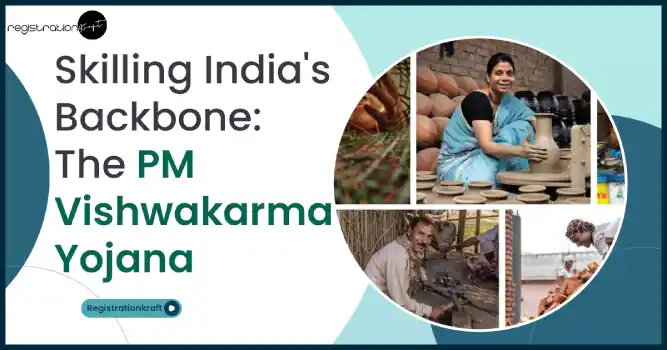
PM Vishwakarma Yojana, a Central Sector Scheme, was launched on 17th September, 2023 by Prime Minister Modi on the special occasion of his 73rd birthday. This scheme was launched with the aim to support skilled craftsmen and tradespeople around the country. It promotes upliftment of the traditional trades. The launch event of this scheme took […]

Are you a farmer dreaming of owning a tractor to make your work easier and more efficient? Here’s some fantastic news for you! The Indian government has launched the PM Kisan Tractor Scheme 2024, a scheme designed to empower farmers like you. This scheme offers an incredible 50% subsidy on the purchase of a new […]
The Employees’ Provident Funds & Miscellaneous Provisions Act, of 1952 provides for the institution of compulsory provident fund in India. The Employee Provident Fund (EPF) is a mandatory retirement savings scheme in India for certain employees to build a corpus for their post-retirement life. In this scheme, the employee and employer contribute a certain percentage […]
As you know the word “MUDRA” is used for money, so the Scheme PMMY is all about money or finance. India’s Honourable Prime Minister launched the PMMY Yojana on April 08, 2015. The purpose behind launching this scheme is to provide loans to small and micro enterprises. The Full form of PMMY is Pradhan Mantri […]

In the world, Aadhaar is the largest biometric identification system. Mostly, the aadhaar card is used as identification proof of the general public in offices, banks or for taking benefit of government schemes. It is a card that consists of your information such as name, gender, date of birth, address, and a 12-digit unique number. […]